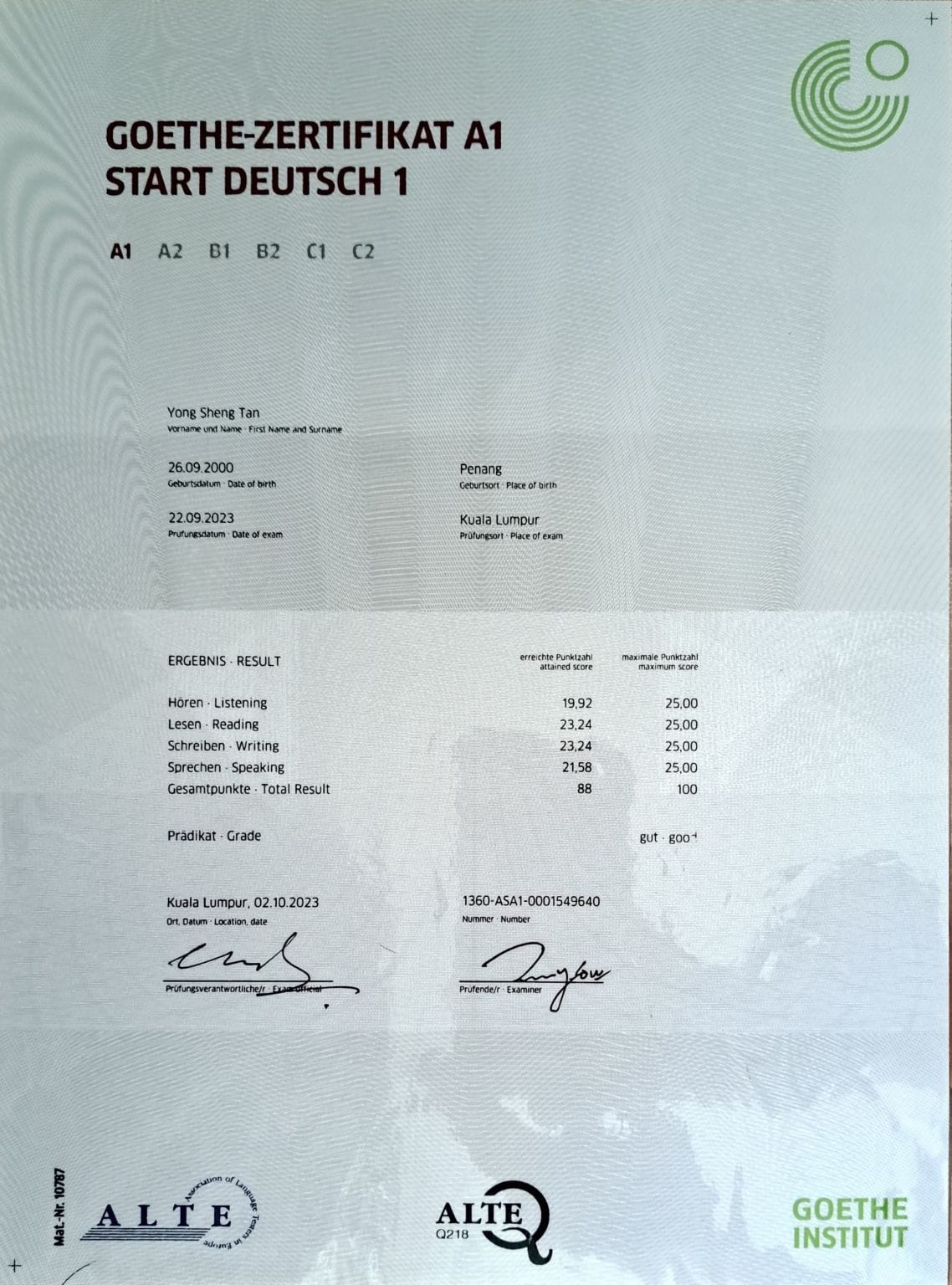
Understanding the German B1 Certificate: A Gateway to Advanced Language Proficiency The German B1 Certificate, typically referred to as the “Zertifikat Deutsch B1,” is a considerable turning point for learners of the German language. This certification, which becomes part of the Common European Framework of Reference for Languages (CEFR), signifies a level of proficiency that permits people to interact efficiently in a vast array of daily and expert scenarios. This article explores the importance of the B1 certificate, the evaluation process, and tips for preparation. What is the German B1 Certificate? The German B1 Certificate is an internationally recognized language qualification that vouches for a learner's ability to comprehend and use German in a range of contexts. At the B1 level, people can: Understand the main points of clear basic input on familiar matters frequently encountered in work, school, leisure, and so on.Deal with the majority of circumstances likely to occur while traveling in an area where the language is spoken.Produce easy linked text on subjects that are familiar or of personal interest.Explain experiences and occasions, dreams, hopes, and ambitions, and briefly give factors and descriptions for viewpoints and strategies.Significance of the B1 Certificate Educational Opportunities: The B1 certificate is typically a prerequisite for admission to German universities and other higher education institutions. It demonstrates to admissions committees that the candidate has a sufficient command of the German language to follow the curriculum and get involved in scholastic conversations.
Expert Advancement: In the expert world, the B1 certificate can open doors to task chances in German-speaking nations or international business. It shows companies that the prospect can communicate successfully in a business environment and handle regular tasks in German.
Cultural Integration: For individuals preparing to live in Germany or other German-speaking nations, the B1 certificate is a valuable tool for integrating into the local community. It enables them to take part in social activities, comprehend cultural subtleties, and construct relationships with native speakers.
Individual Fulfillment: Achieving the B1 level is a substantial individual accomplishment. It increases confidence and offers a sense of accomplishment, encouraging students to continue their language journey. The Examination Process The German B1 Certificate examination is created to assess the prospect's proficiency in all four language skills: reading, composing, listening, and speaking. The test is generally divided into the following areas:
Reading Comprehension: Format: Candidates check out a series of texts and answer multiple-choice concerns.Abilities Assessed: Ability to comprehend and translate composed information, including articles, letters, and narratives. Writing: Format: Candidates write a brief essay or letter based on an offered timely.Abilities Assessed: Ability to express ideas plainly and coherently in written kind, with right grammar and vocabulary. Listening: Format: Candidates listen to audio recordings and address questions based on what they hear.Abilities Assessed: Ability to understand spoken German in various contexts, including discussions, statements, and interviews. Speaking: Format: Candidates take part in a structured discussion with an inspector.Skills Assessed: Ability to communicate successfully in spoken German, consisting of expressing opinions, asking and responding to concerns, and describing circumstances.Preparation Tips Practice Regularly: Consistent practice is essential to enhancing language skills. Engage in activities that include all four language abilities, such as reading German books, writing journal entries, listening to German podcasts, and consulting with native speakers.
Use Authentic Materials: Incorporate genuine products into your research study routine, such as German papers, publications, and TV programs. This will help you end up being acquainted with real-world language usage.
Take Practice Tests: Familiarize yourself with the format and kinds of concerns in the B1 evaluation by taking practice tests. Many resources are available online, and language schools frequently provide mock exams.
Join a Language Course: Enroll in a German language course to receive structured guidance and feedback from knowledgeable instructors. Group classes also supply chances to practice speaking to peers.
Broaden Your Vocabulary: Build a robust vocabulary by discovering brand-new words and expressions routinely. Usage flashcards, apps, or a vocabulary notebook to track your progress.
Look for Feedback: Regularly look for feedback on your speaking and writing abilities from native speakers or language tutors. This will assist you identify locations for improvement and improve your language usage. Frequently asked questions Q: How long does it take to prepare for the B1 examination?
A: The time required to prepare for the B1 assessment varies depending on the individual's starting level and the strength of their study. Generally, it can take a number of months of constant practice to reach the B1 level.
Q: Can I retake the B1 evaluation if I fail?
A: Yes, you can retake the b1 zertifikat kaufen ohne prüfung (https://www.Adandoing.top/education/understanding-The-goethe-zertifikat-a-comprehensive-guide) examination if you do not pass. It is suggested to identify the locations where you need improvement and focus on those before retaking the test.
Q: Are there different versions of the B1 certificate for various purposes?
A: Yes, there are different variations of the B1 certificate, such as the “Zertifikat Deutsch B1” for basic purposes, the “Zertifikat Deutsch B1: Beruf” for professional contexts, and the “Zertifikat Deutsch B1: Gesundheitswesen” for healthcare experts.
Q: Is the B1 certificate valid for life?
A: The B1 certificate is usually thought about legitimate for life, however some institutions might require you to take a new test if a substantial amount of time has actually passed given that your initial certification.
Q: Can I utilize the B1 certificate for visa applications?
A: Yes, the B1 certificate is typically accepted as proof of language proficiency for visa applications to German-speaking nations. Nevertheless, it is constantly advisable to examine the specific requirements of the embassy or consulate.
The German B1 Certificate is a valuable credential that opens various doors in education, employment, and personal growth. By comprehending the assessment procedure and following a structured preparation plan, students can effectively achieve this crucial turning point in their language journey. Whether you are planning to study in Germany, advance your career, or simply improve your language skills, the B1 certificate is a substantial step towards accomplishing your goals. (Image: https://geothezertifikat4all.de/wp-content/uploads/2024/07/1697093618646-1.jpeg)